
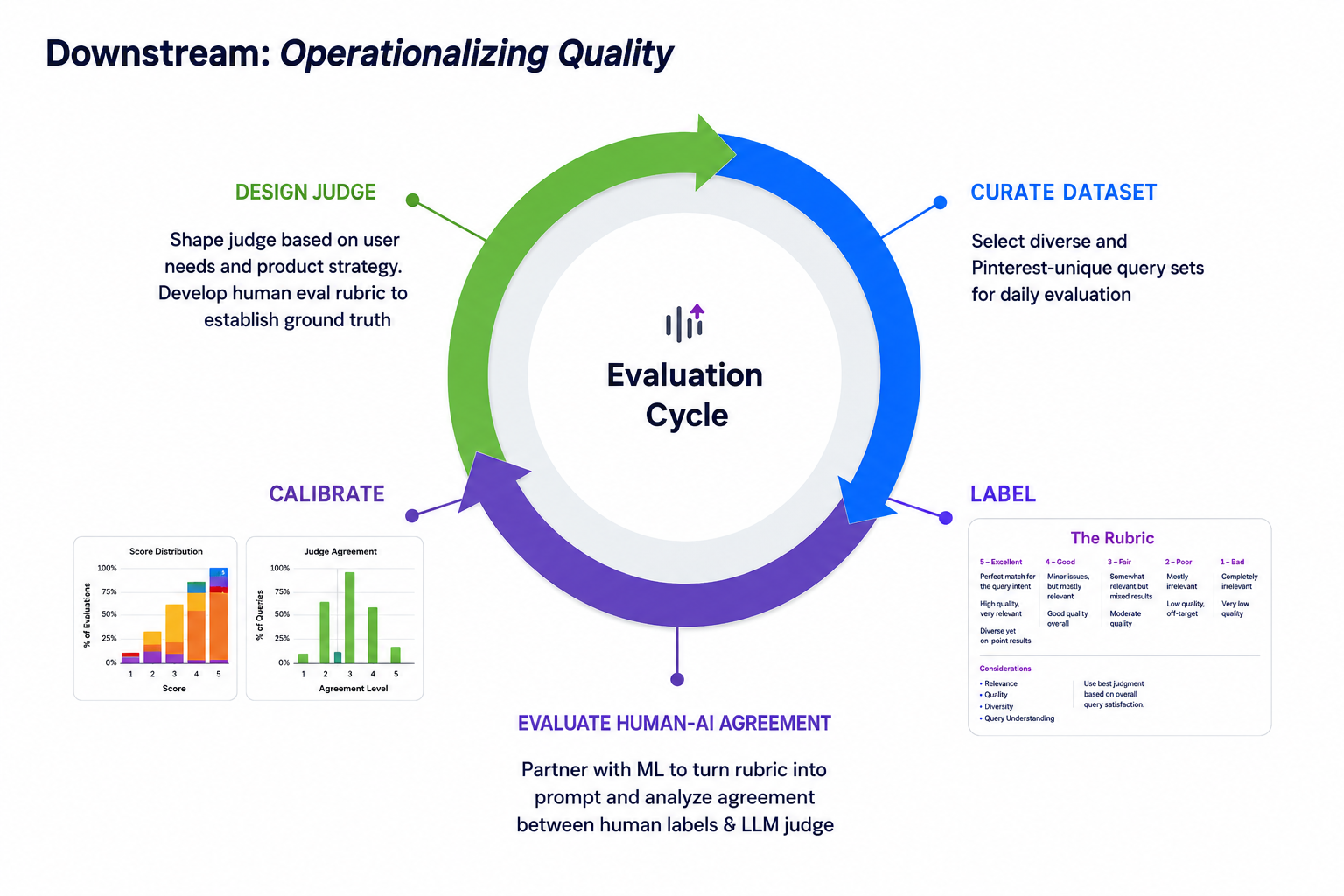
Another standout presentation from last week’s UXDX Conference explored how AI has dramatically transformed research, product design, and personalization, but maintained a focus on human-centered principles. According to Larkin Brown, Senior Director of Product Research at Pinterest, her application is developing beyond simple search into systems that use visual exploration and behavioral patterns to comprehend intent, taste, and personal identity. She talked about a “taste graph,” which links a user’s interests in fashion, home décor, travel, and lifestyle. Instead of taking predictable routes, an AI-driven system guides people between inspirations and interests to find information. This method operationalizes efficiency.
Key takeaways:
• AI-powered experiences are only as strong as the human insights behind them
• Researchers, designers, and engineers now work closer together
• Discovery has become less about search and more about understanding intent, taste, and behavior
• AI systems optimize for patterns, but innovation often comes from the unexpected edge cases
• The role of user research is evolving from reporting findings to actively shaping AI systems and evaluation models
She also explored that AI transformed team collaboration, with user researchers, UX designers, and machine learning engineers now working more closely together in integrated workflows. She described that researchers are now involved in shaping AI evaluation frameworks, curating training data, and setting quality benchmarks for AI-generated outputs. One point that she raised was the importance of real user-centered data. Larkin pointed out some use cases where datasets lacked specific categories and explained how such gaps can lead to biased or flawed AI performance.
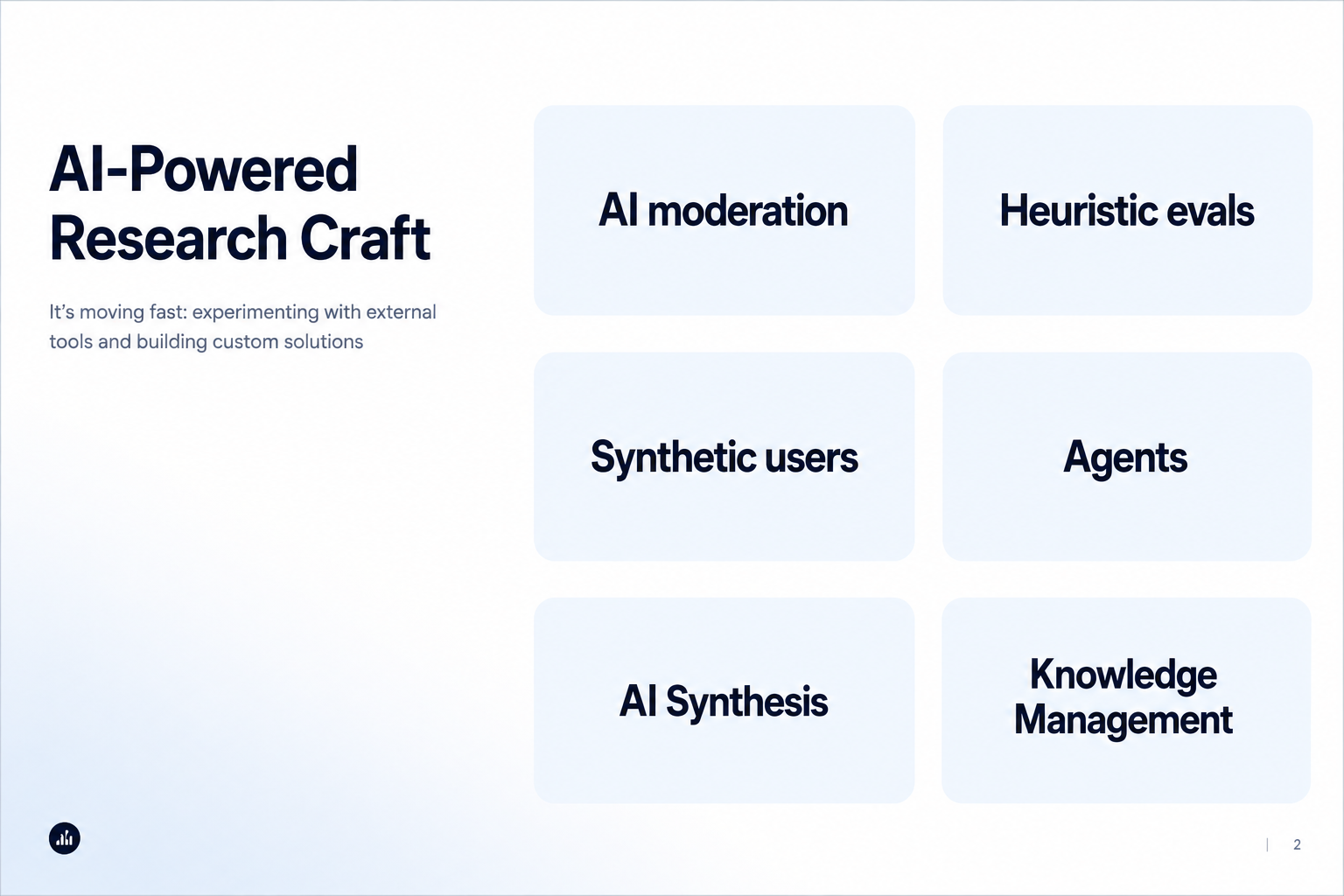
Another point she made was that user-centered design (UCD) remains important, even in an AI-driven environment. Even though AI can quickly generate ideas and solutions, human researchers are still needed to interpret the underlying motivations and emotional drivers behind user behavior. She stressed that teams must look beyond surface-level patterns and focus on understanding users’ feelings, intentions, and uncertainties. Although many perceive AI as sufficiently capable at a broad level, she argued that deeper investigation is necessary.
Larkin advocated for more exploratory and immersive research approaches, noting that breakthrough innovations often stem from unusual behaviors and edge cases rather than typical user patterns. AI systems generally optimize for the center of the bell curve, while meaningful innovation often happens at the edges. AI is a strong tool, but it requires skilled professionals to steer it effectively.
Overall, this session stood out because it emphasized that AI should enhance, not replace, human insight. Organizations should leverage AI to expand the reach of research, creativity, teamwork, and discovery. However, they must maintain empathy, curiosity, and a grounded understanding of human experience. AI has reshaped how we work, but it hasn’t diminished the importance of studying human behavior.
